THE UNSEEN SOLUTION
How Studio+ Project Manager Nate Mosure turns unexpected design challenges into practical solutions.
Every project has its challenges. Some are obvious from the beginning. Others don’t reveal themselves until you’re deep into the details.
For Nate Mosure, Project Manager at the Studio+ Traverse City office, those unexpected moments are part of what makes architecture interesting.
During the design of an Altar’d State retail space at Tampa’s International Plaza, Nate encountered a challenge that wasn’t about what the store should look like. It was about how to communicate a complicated design so someone else could build it.
The store featured a series of sweeping curves, with different radii meeting at precise points throughout the space. Translating those shapes from a design concept into construction documents required more than conventional drawings.
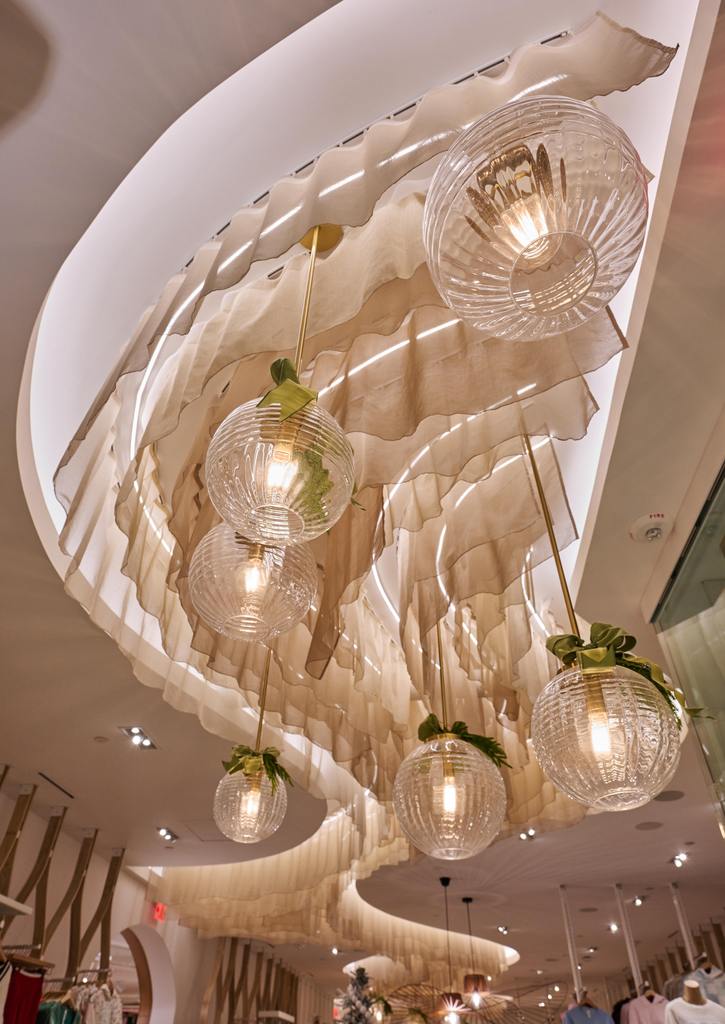
Nate had worked through every curve. But there was still a question: How could the team clearly show contractors exactly where one curve ended and another began?
Rather than leave room for interpretation, Nate and his team developed a new drawing symbol to communicate those transitions.
It was a small innovation with a very practical purpose: make a complicated design easier to understand and execute.
And it worked.
A DIFFERENT WAY OF LOOKING AT PROBLEMS

Nate’s approach reflects something he learned from a former mentor:
“It is simpler, therefore better.”
It’s a philosophy he continues to apply, even when the work itself is anything but simple.
He describes using exploded axonometric drawings to break down complicated architectural assemblies into information that contractors and multiple vendors can understand.
What might appear to be a more elaborate drawing can actually make the construction process easier.
For Nate, the goal isn’t simply to produce drawings. It’s to communicate the design clearly enough that the people responsible for building it have the information they need.
EXPERIENCE CHANGEAS WHAT YOU NOTICE
That same attention to detail influences how Nate approaches decisions long before construction begins.
On another retail project in Oklahoma City, Nate worked with the engineering team to evaluate the electrical needs of a nearly 17,000-square-foot store.
When the engineer identified the need for an additional 200 amps of electrical service, Nate helped coordinate the information and communicate the requirement to the landlord.
It wasn’t necessarily the answer everyone wanted to hear. Adding electrical capacity during construction carries a cost.
But Nate understood what could happen if the issue wasn’t addressed until after the store opened: significantly more expensive work, potential disruption to operations, and a problem that could have been anticipated during planning.
His approach is to ask the difficult questions early, even when the answers create more work in the moment.
MAKING ROOM FOR BETTER IDEAS
Nate brings that same thinking to the people he works with.
He believes experience comes from doing the work, asking questions, and learning how to approach the next challenge differently.
He encourages team members to find more efficient ways of working and doesn’t want anyone to hesitate when they need to ask a question.

It’s a practical philosophy shaped by years of solving problems, working with consultants, and seeing how decisions made on paper translate into finished spaces.
Because no matter how much technology changes, good architecture still depends on people who understand what they’re doing and are willing to work through what they don’t yet know.
MORE THAN THE FINISHED DESIGN
Walk into a completed retail space, and you might notice the lighting, the finishes, or the architectural features that give it character.
Nate sees those things, too.
But he also sees the decisions behind them. The coordination, the conversations, the unexpected challenges, and the solutions that made the finished space possible.
For Nate, those moments are where experience becomes something more valuable: the ability to recognize a problem, think differently, and find a better way forward.
Because behind every successful design are people who know how to turn challenges into solutions.